
How to Remove Black Spots from a Patio (Buckinghamshire Guide)
Black spots on a patio are something we’re asked about all the time across Buckinghamshire.
Often, people have already tried cleaning it themselves, or had it pressure washed before. It looks better at first, but the darker marks never fully disappear — or they come back not long after. It ends up feeling like the same problem, just repeating itself.
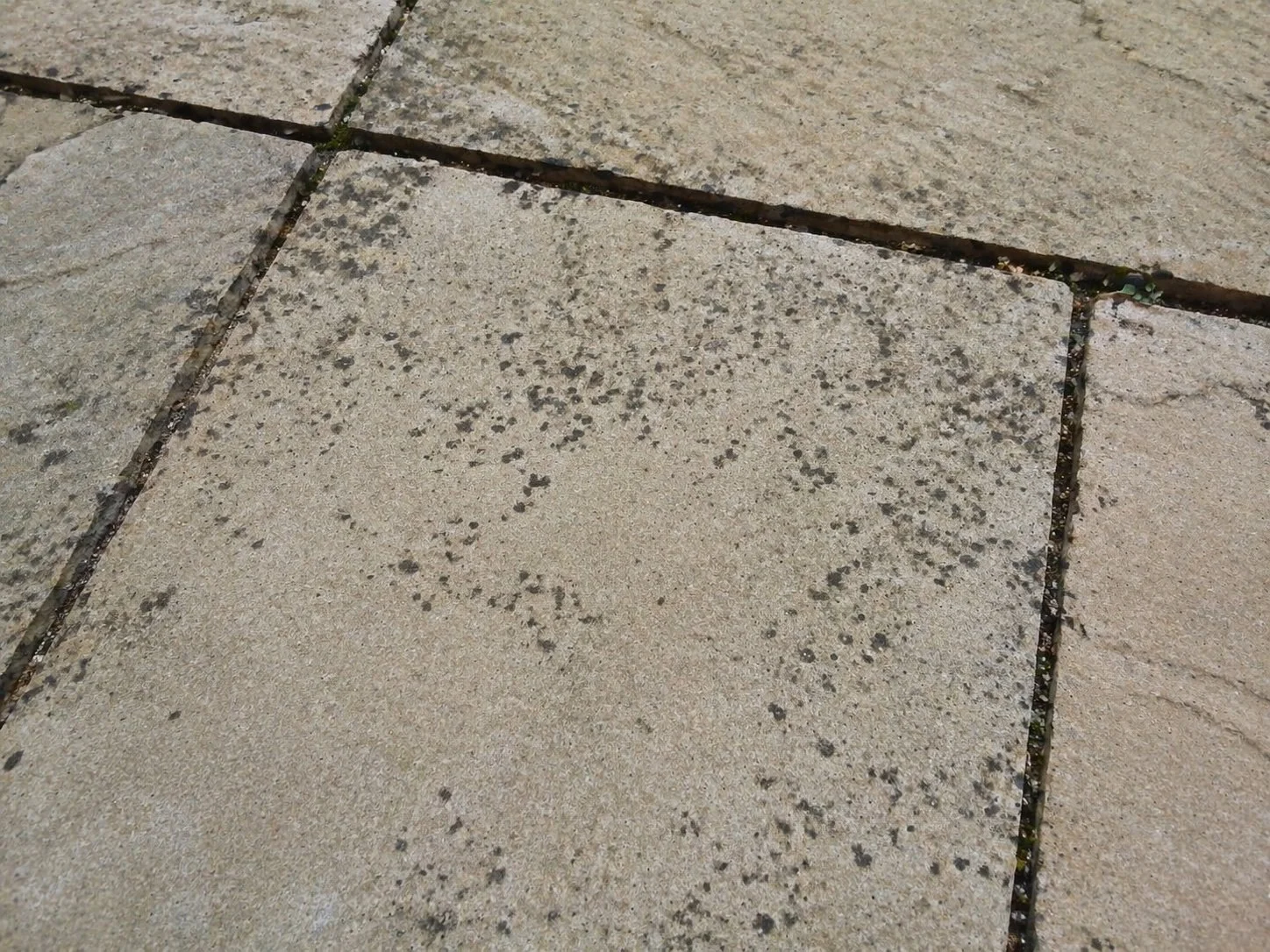
In many cases, those spots are caused by lichen. It’s different to general dirt or algae. It bonds itself into the surface of the stone, particularly on more porous materials, which is why it can be so difficult to remove completely.
A standard pressure wash will usually improve the overall look quite quickly, but it doesn’t always deal with what’s sitting within the surface. You’re essentially removing what’s visible, rather than what’s causing it.
That’s also where things can sometimes go the wrong way. Increasing the pressure to try and force the marks out can damage softer materials like sandstone or limestone, leaving the surface slightly rougher and more open to future growth.
What tends to work better is a more considered approach.
The cleaning itself is only one part of it. What makes the difference longer-term is how the surface is treated afterwards.
On the right surfaces, a professional biocidal treatment can help deal with organic growth beyond what’s immediately visible. Used correctly, it reduces what’s left behind and helps slow things returning, rather than just improving the appearance for a short period.
It’s not always about an instant transformation. In many cases, the surface continues to improve over time as the treatment does its job and the remaining staining gradually breaks down. That’s usually what leads to a more stable result, rather than something that looks good briefly and then starts to revert.
Across areas like Marlow, Beaconsfield and the wider Buckinghamshire region, this tends to be more noticeable because of the environment. Shaded gardens, nearby trees, and damp conditions all create the kind of setting where this sort of growth thrives. Without the right follow-up, it doesn’t take long for it to come back.
There are DIY options out there, and they can make a visible difference, but they don’t always address what’s happening beneath the surface. That’s usually where the frustration comes from — it looks better for a while, but doesn’t stay that way.
Sealing can sometimes be the right next step, particularly on more porous stone, but it depends on the condition of the surface once it’s been cleaned. Applied at the wrong time, it can cause more issues than it solves, so it’s something that needs to be considered carefully rather than treated as a default.
Most of the work we do is really about getting that balance right — improving how the surface looks, while making sure it holds up over time rather than slipping back after a few months.
If you’re dealing with black spots that don’t seem to go away, it’s usually a sign that the approach just needs to be adjusted slightly.